Bird Bath Guide: Setup, Placement and Seasonal Care
Water draws robins, warblers, thrushes and catbirds that rarely eat seed. Depth, placement and cleaning make the difference.
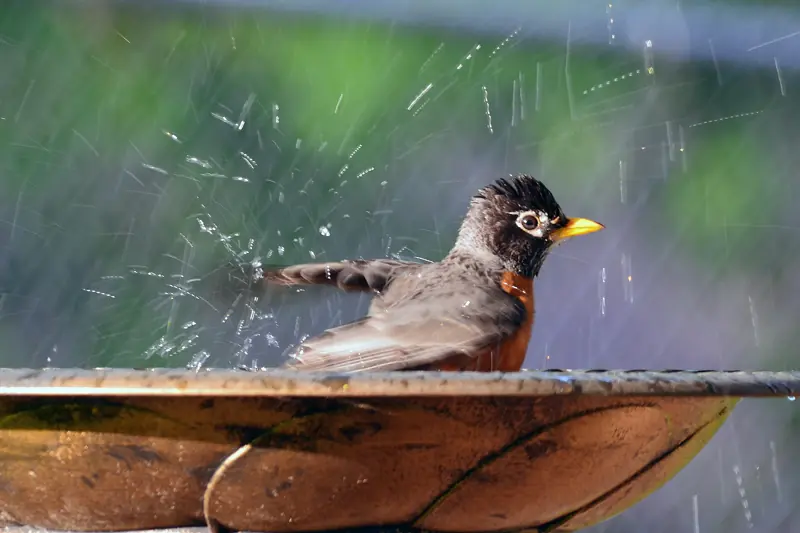
If you already have feeders and want to see more kinds of birds, add a bird bath. A clean, shallow water source with moving water attracts species that never visit seed feeders — warblers, thrushes, vireos, catbirds, wrens, orioles — and it draws regular visitors like chickadees and cardinals more reliably than almost anything else you can offer.
The catch: most bird baths are used incorrectly. The design, depth, placement, and maintenance all matter more than most people realize.
Why Water Works So Well
Birds need water every day for drinking and bathing, regardless of season. In warm weather, bathing helps with feather maintenance and parasite control — birds that bathe regularly have better plumage condition and are better insulated. In cold weather, open liquid water can be genuinely scarce in many regions, making a reliable water source enormously valuable to wintering birds.
The species that a bird bath attracts but a seed feeder doesn’t: American Robin, Gray Catbird, Eastern Bluebird, warblers (especially in migration), Swainson’s Thrush, Wood Thrush, Baltimore Oriole, Red-eyed Vireo, Carolina Wren, Cedar Waxwing. Most of them rarely or never eat seed, so water, fruiting plants and insects are what bring them in. The National Wildlife Federation lists a water source as one of the core elements of wildlife habitat.
Bird bath types
Pedestal Bath
The classic garden bird bath on a pedestal stand. Advantages: elevates water off the ground (reducing ground predator risk), looks attractive, and is stable in wind. Disadvantages: often too deep (many come with 3–4 inch basins); the weight and design make them hard to clean; concrete versions can crack in freeze-thaw cycles.
If you choose a pedestal bath, pick one where the basin is removable for cleaning, and consider a shallow insert or rocks placed inside to reduce depth to 1–2 inches maximum.
Ground-Level Bath
A shallow basin at ground level, ideally on a slight slope, mimics a natural pool or puddle edge. Ground-level baths see very heavy use from ground-feeding species like thrushes, sparrows, and towhees that won’t approach elevated baths. The risk: cats and other predators can approach more easily, so placement near cover is critical.
Hanging Bath
A shallow dish hung from a branch or shepherd’s hook. Best for small birds; larger species can’t use them easily. Easy to clean but requires frequent water changes since the small volume evaporates and gets dirty quickly.
Deck-Mounted Bath
Attaches to a deck or fence rail with a bracket. Useful if you have no yard space but want a bath close to a window for observation. Works well but requires careful placement so it doesn’t block flight paths or create window collision risk.
The Most Important Feature: Depth
Most commercial bird baths are too deep. Birds need water that’s no more than 1–2 inches deep at the center for bathing. At 3+ inches, small songbirds won’t wade in — it’s above their center of gravity and they feel unstable. The ideal bath has a gradual slope from 0.5 inches at the edge to 2 inches at the center.
If your bath is too deep, add flat stones, gravel, or a purchased bath insert to raise the bottom. This one change often gets an ignored bath used.
Placement Rules
- Near cover but not under trees: Within 10 feet of a shrub or low tree gives birds a perch to survey from before landing and a place to retreat to. Directly under a tree creates a leaf and debris mess in the water and can give squirrels easy access.
- In partial shade: Full sun heats water quickly and accelerates algae growth; full shade reduces visibility to birds. Morning sun, afternoon shade is ideal.
- Away from feeders: Bathing birds scatter seed husks and feathers into the water; birds feeding at nearby seed feeders create chaotic competition. Give baths a separate location, at least 10–15 feet from feeders.
- Visible from a window: You want to see it. Place it where you spend time — facing the kitchen sink, the living room window, wherever you naturally look outside.
- Level surface: An unlevel bath will drain to one side; some spots will become too deep, others too shallow. Use a level when placing.
Moving water
Still water in a bird bath is good. Moving water is dramatically better. Birds detect moving water by sound — the drip or trickle of water carries much farther than any visual signal. Birders widely report that a dripper or bubbler brings more visitors than still water, especially during migration.
Drippers
A dripper is a simple device that sits in the bath and drips water continuously, creating ripples and sound. They connect to a garden hose and require very little water flow. Most songbirds are strongly attracted to the sound and visual movement of a dripper. This is the most cost-effective moving water upgrade you can make.
Misters
A mister creates a fine spray of water above the bath. It’s particularly effective for hummingbirds, which bathe by flying through mist rather than wading into a bath. Warblers also love misters. Position mister spray so it falls into or just beside the bath.
Fountains and Pumps
A recirculating pump that creates a small fountain in the bath is the most effective moving water option — it creates continuous sound and movement and doesn’t require a garden hose connection. The downside is that the pump needs to be cleaned with the bath and requires electricity.
Cleaning Schedule
A neglected bird bath becomes a disease vector rather than an asset. Avian diseases including House Finch eye disease (Mycoplasmal conjunctivitis) and salmonellosis spread through contaminated water. Minimum cleaning schedule:
- Water change: Every 2–3 days in summer; every 4–5 days in cool weather
- Scrub basin: Weekly — scrub with a stiff brush to remove algae and debris; rinse thoroughly
- Deep clean: Monthly — scrub with a 10% bleach solution; rinse at least 5 times; let dry before refilling
Skip dish soap. Residue is hard to rinse completely. A stiff brush and plain water handle routine cleaning, and a dilute bleach solution followed by a thorough rinse handles disinfection.
Winter bird baths
In freezing climates, liquid water in winter is rare and extremely valuable to birds. A heated bird bath or a bath de-icer (a submersible heating element that keeps water just above freezing) is one of the most useful things you can add in a cold climate.
Winter birds that reliably come to open water when other water is frozen: American Robin (wintering flocks), Cedar Waxwing, Northern Cardinal, Dark-eyed Junco, Tufted Titmouse, White-throated Sparrow, Purple Finch, and many others. A heated bath on a cold January morning can be genuinely spectacular.
De-icers draw modest electricity (50–150 watts) and most thermostatically shut off when temps rise above freezing. Position near an outdoor GFCI outlet or use a heavy-gauge extension cord rated for outdoor use.
What to buy
You don’t need an expensive bath. Look for a shallow basin (or add stones), a textured surface birds can grip, and a design that is easy to empty and scrub. Durable resin or glazed ceramic is easier to clean than rough concrete. A small solar fountain or hose dripper is the best upgrade for the money.
Bird Bath Quick Reference
- Ideal depth: 0.5” at edge, 2” max at center
- Best upgrade: Dripper or mister for moving water
- Placement: Partial shade, near cover, away from feeders, level surface
- Change water: Every 2–3 days in summer
- Deep clean: Monthly with 10% bleach solution
- Winter: Heated bath or de-icer for maximum winter bird attraction
- Cleaning: brush and water routinely; dilute bleach and a thorough rinse for disinfection
For more on creating a complete bird-friendly habitat, see our bird-friendly backyard guide.
Keep exploring

How to Create a Bird-Friendly Backyard
Native plants, water, shelter, nest sites and safety: a step-by-step plan for a yard birds rely on.
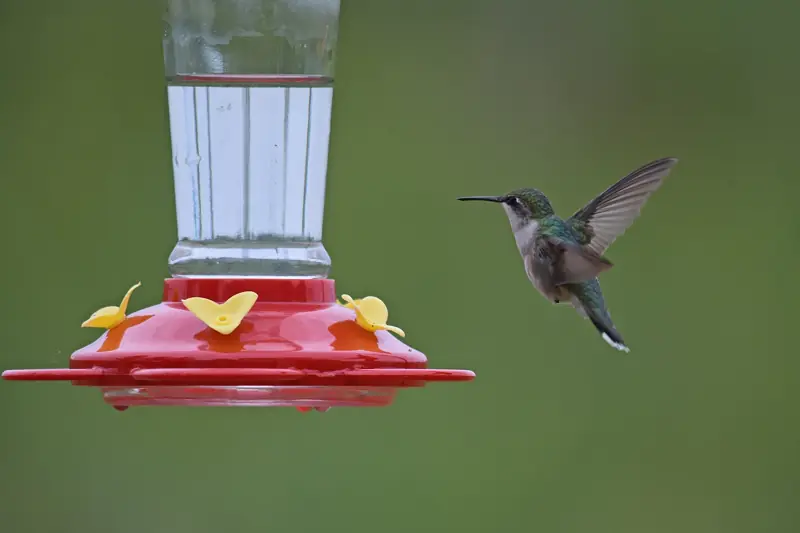
How to Attract Hummingbirds to Your Yard
Nectar, native flowers, perches and timing: how to bring hummingbirds in and keep them coming back.
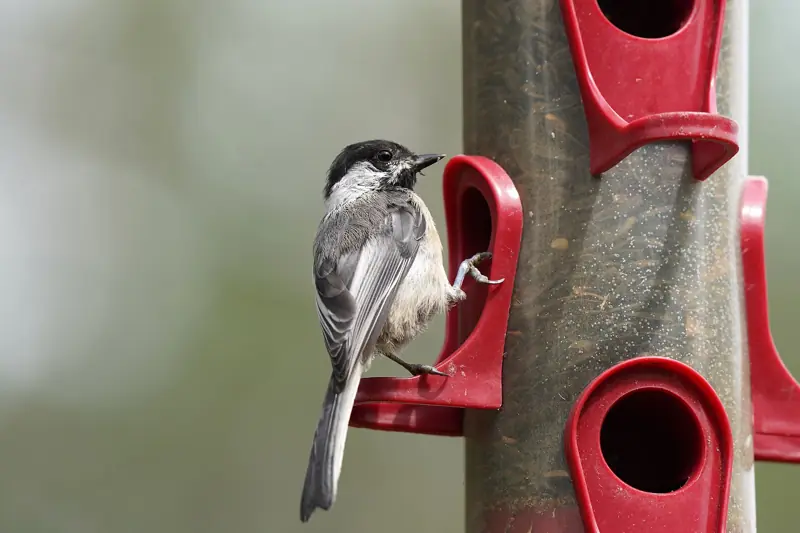
How to Clean a Bird Feeder: Step-by-Step Guide
How often to clean each feeder type, the right solution and a step-by-step routine.
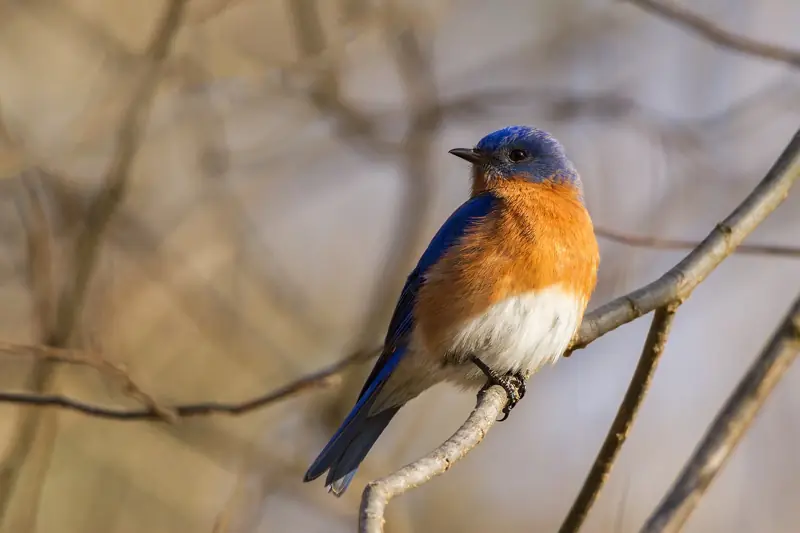
How to Attract Bluebirds to Your Yard
Mealworms, berry plants, open lawn and the right nest box: what bluebirds need.
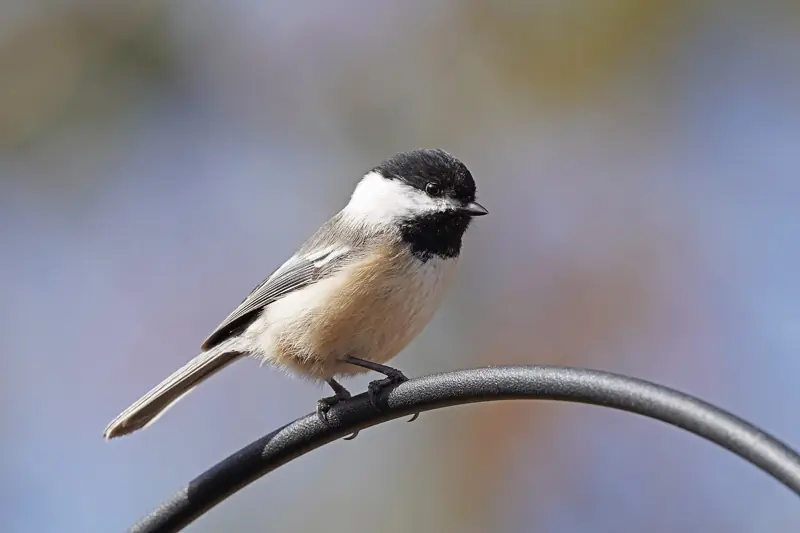
What Birds to Expect Each Season at Your Feeder
Winter finches, spring migrants, summer fledglings and fall arrivals, with feeding tips for each season.
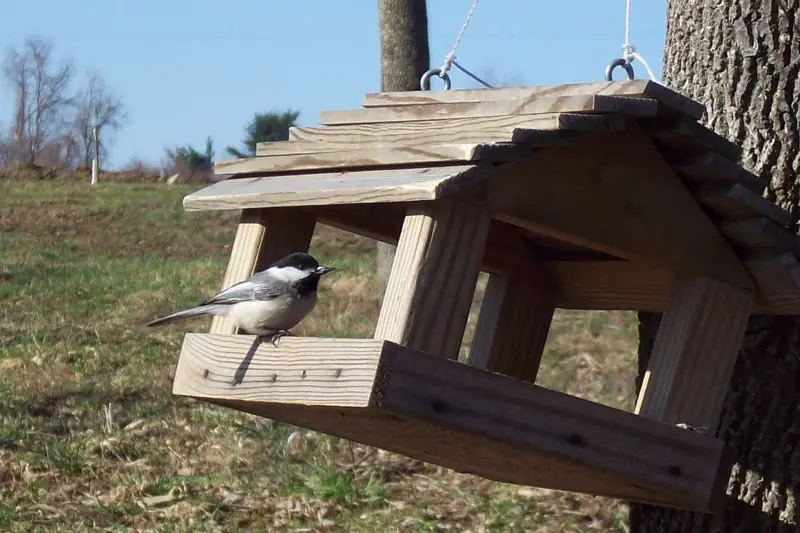
Bird Feeder Placement Guide: Where to Hang Your Feeders
Distance from cover, the 3-foot/30-foot window rule, height by feeder type and squirrel clearance.