Bird Feeder Placement Guide: Where to Hang Your Feeders
The same feeder can be busy or ignored depending on where it hangs. Here are the rules that matter and why.
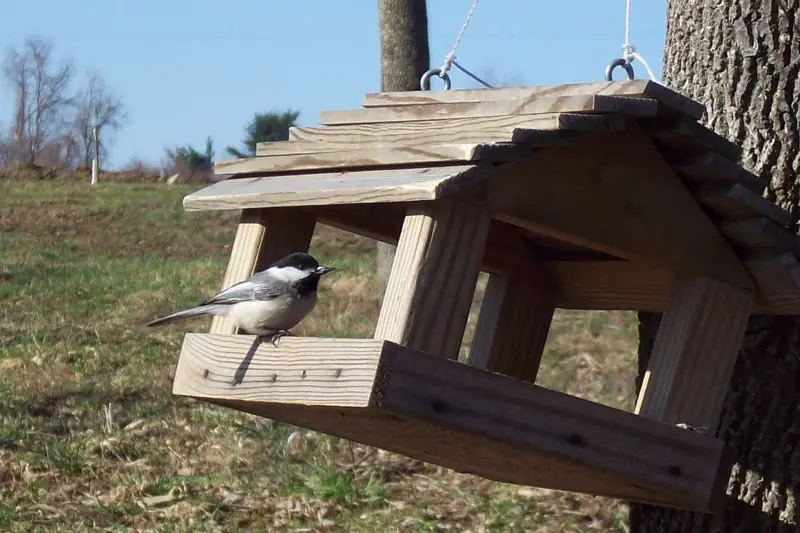
Feeder placement is the factor most backyard birders never think about — and it’s often the reason a well-stocked feeder gets disappointing results. The right seed in the wrong location produces fewer birds than mediocre seed in the right location. Birds need to feel safe approaching, they need cover nearby to escape to, and they need to actually find the feeder in the first place. All of that is about placement.
The Three Rules That Matter Most
Rule 1: Near Cover, Not in the Open
The single most common placement mistake is putting a feeder in the center of an open lawn, far from any trees or shrubs. It feels logical — better visibility for you, no squirrel jumping points — but it’s wrong for how birds actually behave.
Birds are prey animals. Before approaching any food source, they need a place to observe from while assessing whether it’s safe to land. Then, once they’re at the feeder, they need somewhere to flee to instantly if a hawk or other predator appears. A feeder in the open provides neither.
The right setup: Position feeders 10–15 feet from a tree, dense shrub, hedge, or brush pile. This is close enough for birds to observe from cover before approaching and to escape to when startled, but far enough that squirrels can’t leap directly from the tree to the feeder.
Rule 2: Window Safety Distance
Collisions with glass kill hundreds of millions of birds a year in the U.S., by American Bird Conservancy estimates up to about a billion. Only free-roaming cats kill more. Birds see reflected sky and vegetation in the glass and don’t recognize it as a barrier. Cornell Lab guidance is to keep feeders either very close to windows or well away from them.
The safe zones:
- Within 3 feet of a window: Birds can’t accelerate to dangerous speed before hitting glass. This is safe. A feeder mounted directly on a window (suction cup style) or within arm’s reach of glass is safe and offers excellent close-up views.
- More than 30 feet from windows: far enough that birds flushing from the feeder are less likely to head straight into the glass.
- Between 3 and 30 feet: avoid if you can. A startled bird can reach full speed in that distance and hit the window hard. If you have no choice, treat the glass with exterior markers or screens.
Rule 3: Visible from Where You Spend Time
This one is about you, not the birds — but it matters for whether you actually enjoy your setup. A feeder that’s theoretically ideal but positioned where you never look will be unsatisfying. The best location for you is one you see naturally while doing other things: cooking, working at a desk, having morning coffee. Set feeders up facing that window.
How high should a bird feeder be?
Tube and Hopper Feeders
About 5–6 feet off the ground works for most hanging and pole feeders. That is high enough to keep feeding birds out of a cat’s easy reach, and low enough to refill and watch easily. On a baffled pole, the baffle’s top should be about 4–5 feet up with the feeder above it.
Platform and Tray Feeders
Ground-feeding species like Mourning Doves, towhees, Dark-eyed Juncos, and White-throated Sparrows actually prefer low platforms at 2–3 feet, mimicking natural ground feeding. A low platform attracts different species than a hopper at 5–6 feet. Keep it a few yards out from dense shrubs so cats can’t ambush from cover.
Hummingbird Feeders
Place hummingbird feeders at approximately eye level — 4–5 feet high — near tubular flowers if possible, in partial shade. Avoid direct sun, which accelerates nectar fermentation. See our hummingbird feeder guide for full details.
Suet Feeders
Woodpeckers prefer suet feeders at 5–6 feet, attached to a tree trunk or a post near a tree. Tail-prop feeders, with a board below the cage for the woodpecker to brace against, suit larger woodpeckers such as red-bellied and pileated.
Distance Between Feeders
If you have multiple feeders, space them far enough apart that the more aggressive feeder species can’t simultaneously dominate all of them. House Sparrows, European Starlings, and Mourning Doves in particular tend to monopolize feeders and displace other species.
Practical rule: space feeders at least 6–10 feet apart. Even better: place feeders on different sides of the yard, or at different heights, so aggressive birds can’t guard all of them simultaneously.
Feeder Placement by Species
Different species have different comfort levels and feeding preferences that affect placement:
- Northern Cardinal: Needs dense cover within 10–15 feet; prefers hopper or platform feeders; early morning and late afternoon feeder
- American Goldfinch: More comfortable in open areas than most species; does well on tube feeders with nyjer seed even without immediate cover
- Black-capped Chickadee: Bold and adaptable; will visit feeders in nearly any reasonable location; tube or hopper feeders
- Downy Woodpecker: Prefers feeders near tree trunks; suet cages attached to trees or posts adjacent to trees
- White-breasted Nuthatch: Similar to woodpecker; prefers feeders near or on large trees; will cache seed from feeders
- Mourning Dove: Ground or low platform feeder; open area preferred; millet or cracked corn
- Dark-eyed Junco: Ground feeder in winter; low platform or ground-scattered seed near shrubby cover
Dealing with Placement Constraints
Small Yards or No Trees
If your yard has no trees or large shrubs, create artificial cover. A brush pile (stacked branches and prunings) in a corner provides the escape cover birds need. A dense potted shrub or trellis-mounted evergreen near the feeder serves the same purpose. Even a simple fence panel within 10 feet will improve your feeder activity compared to open lawn.
Apartment or Condo Balconies
Window feeders (suction cup mount) or railing-mount feeders work well for limited spaces. The within-3-feet-of-glass rule applies here — a window-mounted feeder is in the safe zone. Use a small amount of sunflower seed and be prepared to clean more frequently since there’s usually less air circulation on a balcony.
High-Squirrel Areas
If squirrels are a serious problem, see our squirrel-proof feeder guide for the full setup. For placement, keep feeders roughly 8–10 feet from anything a squirrel can jump from, including trees, fences, decks and roofs. Gray squirrels can leap that far horizontally, and feeders that seem clear of trees often aren’t. See poles and baffles for the hardware.
Use Our Feeder Planner
For a personalized recommendation based on your specific yard, region, and goals, try our Feeder Setup Planner. It takes your yard details and gives you a custom placement and feeder strategy based on the species in your region.
For a quick, rule-based answer, the Feeder Placement Calculator takes your window distance, cover, squirrels, cats and feeder type and suggests a placement zone and mounting height.
Camera feeders have a couple of extra needs. They need a Wi-Fi signal at the mounting spot and, for solar models, several hours of direct sun on the panel. Point the lens so the sun is behind it rather than shining into it. More in our smart feeder buying guide.
Placement Quick Reference
- Cover distance: 10–15 feet from dense shrubs or trees
- Window safe zone: Within 3 feet OR more than 30 feet from glass
- Standard feeder height: 5–6 feet for tube/hopper; 2–3 feet for platform
- Squirrel clearance: about 8–10 feet from any launch point, plus a baffle
- Multiple feeders: Space 6–10 feet apart minimum
- Your visibility: Face a window you look out frequently
Keep exploring
Bird Feeder Placement Calculator
Window distance, cover, cats, squirrels and feeder type become a placement zone and mounting height.
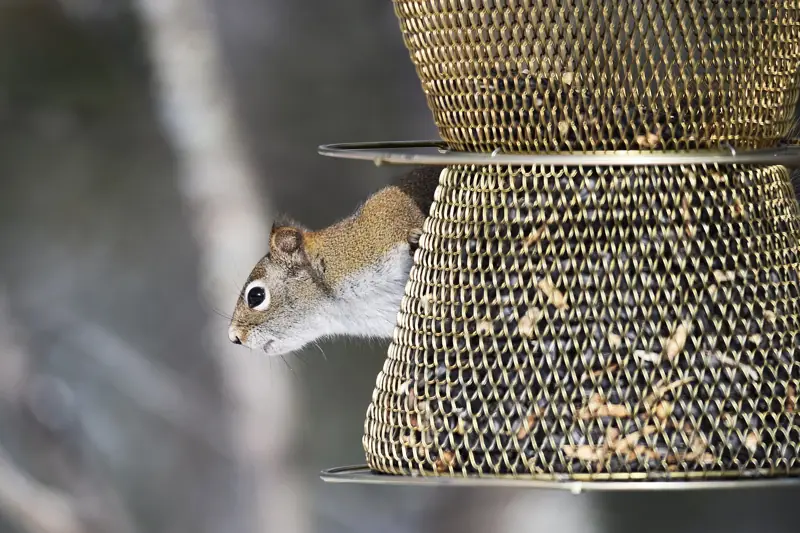
Bird Feeder Poles and Squirrel Baffles
Pole systems, dome vs. stovepipe baffles, mounting heights and the accessories worth adding.
Squirrel-Proof Bird Feeders: What Actually Works
Weight-activated, caged and motorized feeders compared, plus baffles, placement and seed that squirrels skip.
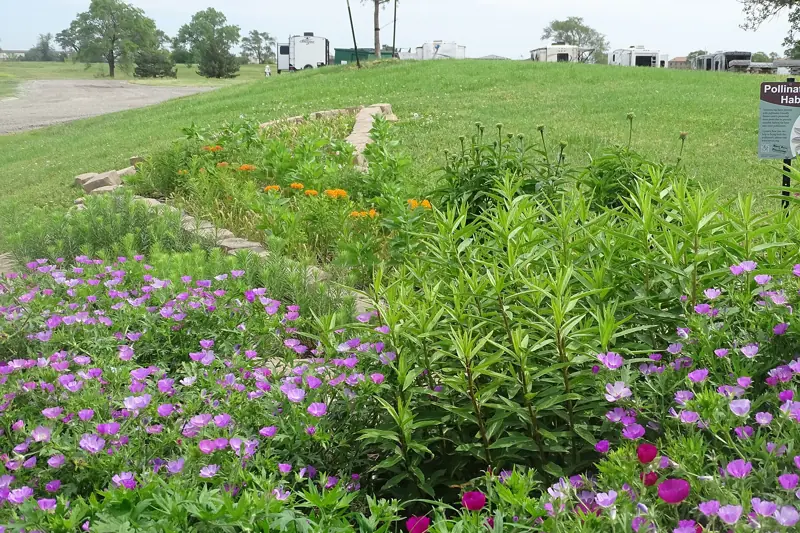
How to Create a Bird-Friendly Backyard
Native plants, water, shelter, nest sites and safety: a step-by-step plan for a yard birds rely on.
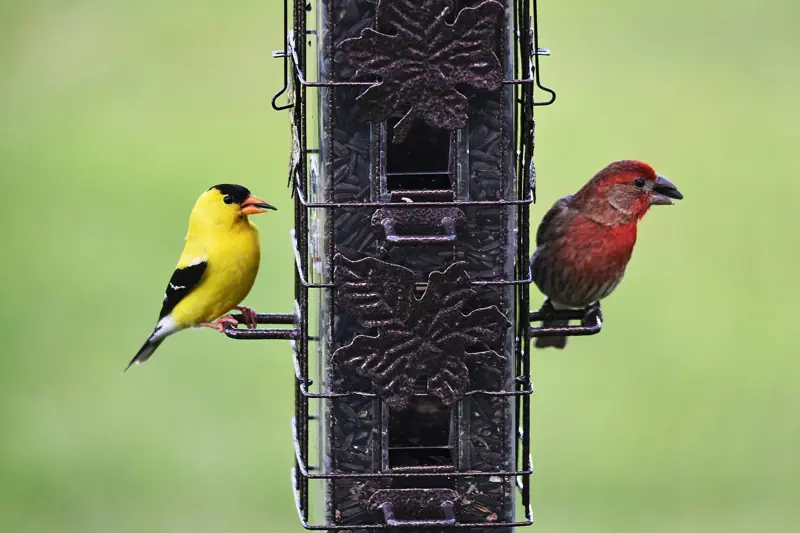
Best Bird Feeders by Type
Research-based picks for tube, hopper, platform, finch, suet, window and squirrel-proof feeders.
Build Your Backyard Bird Plan
Enter your yard and target birds for a personalized feeder, food and placement plan you can print or email.