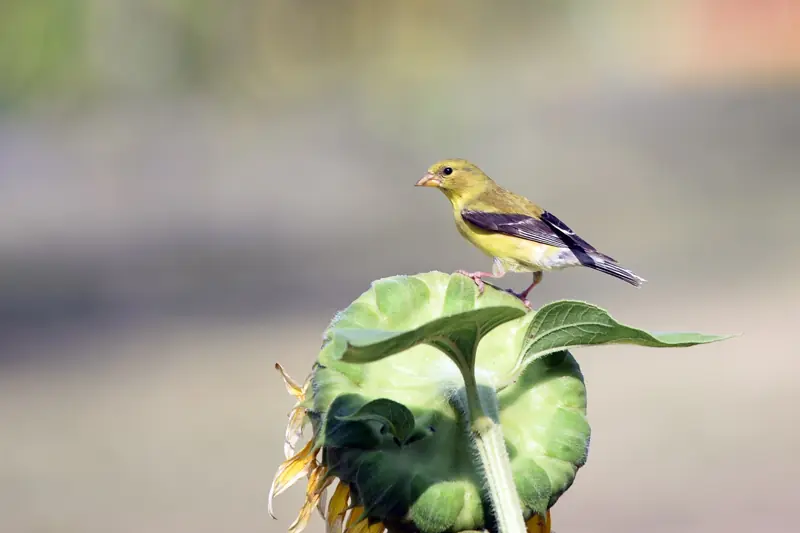
Bird Food
What Bird Seed Attracts Which Birds? Complete Backyard Guide
Which birds eat sunflower, nyjer, safflower, suet, peanuts and millet, with the right feeder for each.
What to buy, what to skip, how to store it and how to change what you offer through the year.
Want an answer for one bird? Use the Bird Seed Selector. Want the whole picture? The seed-by-species chart covers it at a glance.
Which birds eat sunflower, nyjer, safflower, suet, peanuts and millet, with the right feeder for each.
Choose a bird, season and your squirrel and mess tolerance. Get the seed and feeder to use.
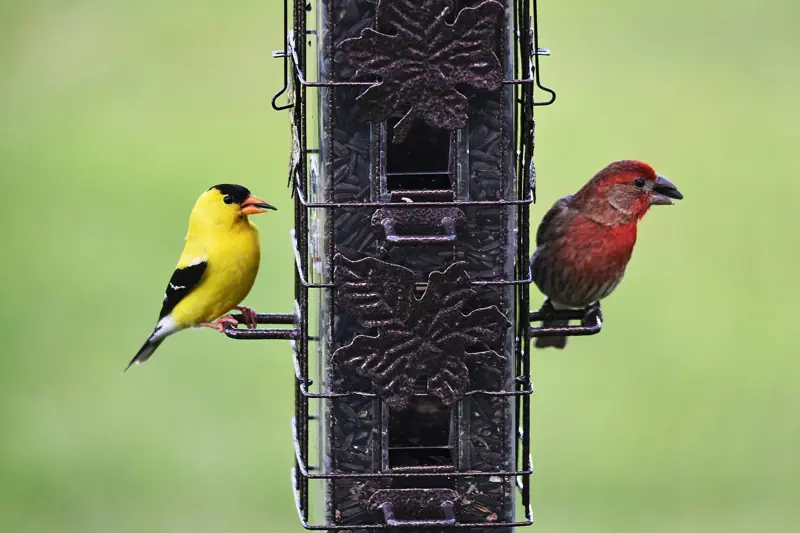
Your first feeder, the three seeds worth buying, where to hang it and how to keep it clean.
For most backyards in the eastern and central U.S., this short list covers nearly every feeder bird:
Mixes: choose blends where sunflower, sunflower chips, peanuts or safflower are the first ingredients. Skip bags that lead with milo, wheat, oats or red millet. Many birds kick those onto the ground. Widely sold brands include both good and filler-heavy blends, so read the ingredient list rather than the picture on the bag.
“No-mess” seed
Hulled seeds such as sunflower chips, hulled millet and peanut pieces leave no shells and won’t sprout under the feeder. Blends sold as “no-mess” are usually hulled seed. They cost more per bag, but you’re not paying for shells. Check no-mess blends
Suet is rendered beef fat, usually pressed into cakes with seeds, nuts, insects or fruit. It’s a high-energy food for woodpeckers, nuthatches, chickadees, titmice, wrens and creepers. In some areas, bluebirds and yellow-rumped warblers take it too.
Mealworms are beetle larvae, sold live or dried. They are the best feeder food for bluebirds and are also eaten by wrens, robins, chickadees, titmice and nuthatches.
Mix 1 part plain white sugar to 4 parts water. Don’t add dye, honey, brown sugar or sweeteners. Change it every 1–2 days in hot weather. Orioles take the same mix from oriole feeders with larger ports. Full details are in the hummingbird feeder guide.
Orange halves on a spike, and small amounts of grape jelly in a dish, attract orioles in spring. Catbirds, mockingbirds, tanagers and red-bellied woodpeckers may take them too. Serve jelly sparingly, in a shallow cup rather than a deep dish, and replace it often. Native fruiting shrubs are a better long-term source. See native plants.
| Season | Focus on |
|---|---|
| Winter | Black-oil sunflower, suet, peanuts; fresh water (heated bath). Food matters most in severe cold and snow. |
| Spring | Nectar and oranges/jelly as hummingbirds and orioles return; mealworms for bluebirds and wrens. |
| Summer | Smaller amounts of seed so it stays fresh; no-melt suet or none; nectar kept fresh; clean more often. |
| Fall | Nyjer and chips for finches; millet on a low tray as sparrows and juncos arrive; keep nectar up for late migrants. |
Which birds eat sunflower, nyjer, safflower, suet, peanuts and millet, with the right feeder for each.
Choose a bird, season and your squirrel and mess tolerance. Get the seed and feeder to use.
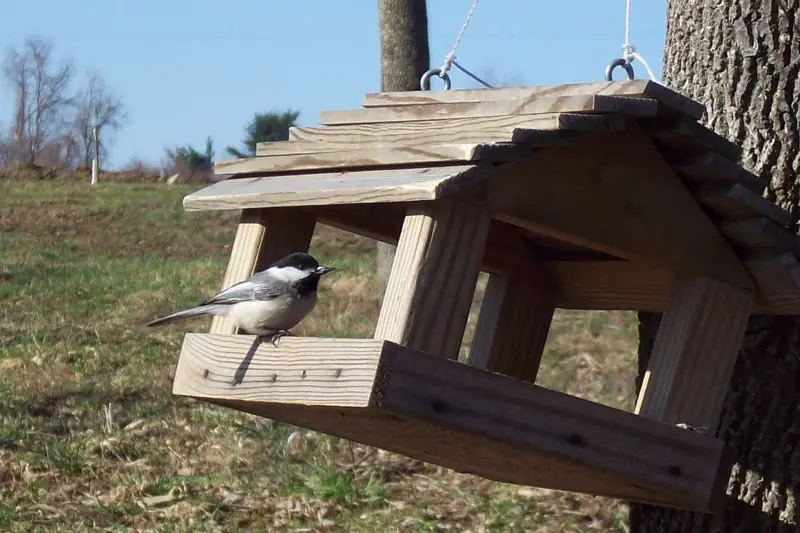
Tube, hopper, platform, suet, nyjer, hummingbird, window, squirrel-proof and smart feeders compared.
Ten proven changes to attract more birds, plus guides for cardinals, bluebirds, goldfinches, woodpeckers and more.
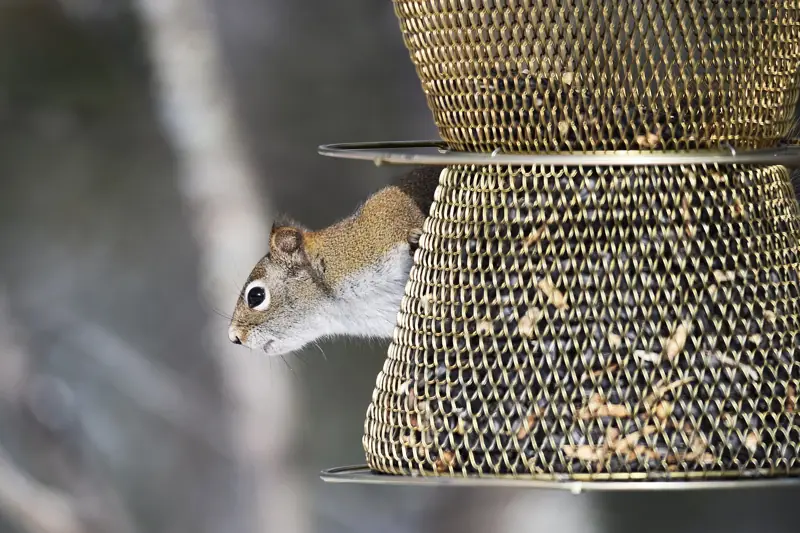
Weight-activated, caged and motorized feeders compared, plus baffles, placement and seed that squirrels skip.
How often to clean each feeder type, the right solution and a step-by-step routine.