How to Attract Bluebirds to Your Yard
Bluebirds rarely eat seed. They come for open grassy space, insects, berries, mealworms and, most of all, a properly built nest box.
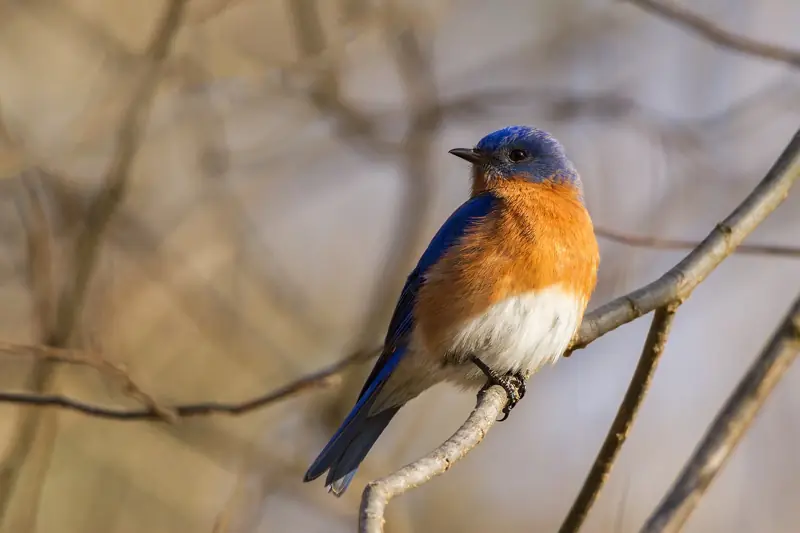
Which bluebird lives near you?
North America has three bluebird species, all small thrushes that nest in cavities:
- Eastern bluebird: east of the Rockies, from southern Canada to the Gulf. Year-round across much of the South and East; northern birds move south for winter. Males are deep blue above with a rusty-orange throat and breast.
- Western bluebird: Pacific states, the Southwest and parts of the Interior West. Males have a blue throat and rusty breast that extends onto the upper back.
- Mountain bluebird: open country in the West and Great Plains. Males are sky-blue all over.
Range maps for each are on All About Birds. The advice below applies to all three.
Habitat: open ground with perches
Bluebirds hunt by watching the ground from a low perch, then dropping onto insects. They favor open, short grass with scattered trees, fences or wires for perches: parks, pastures, golf courses, orchards and large lawns. Densely wooded lots and small, heavily shrubbed yards rarely suit them. If your yard borders open space, your chances are much better.
What bluebirds eat
In the breeding season bluebirds eat mostly insects: beetles, grasshoppers, caterpillars, crickets and spiders. In fall and winter they switch largely to fruit. They seldom eat regular birdseed, which is why many people never see them at a feeder.
| Offer | How | Notes |
|---|---|---|
| Mealworms (live or dried) | Small dish or cup feeder, or a “bluebird feeder” with entrance holes | The most reliable feeder food; offer small amounts at set times. Soak dried ones in warm water. |
| Suet crumbles / nuggets | Dish or tray | Useful in cold weather |
| Fruit and berries | Native plants (best) or chopped fruit on a tray | Dogwood, holly, winterberry, sumac, serviceberry, eastern red cedar/junipers |
| Sunflower hearts | Tray | Occasionally taken, especially in winter |
Mealworms are a treat, not a diet. Offer a modest amount so adults keep foraging naturally. Feed them in a spot visible from a perch but out in the open, so cats can’t hide nearby.
Plants that feed bluebirds
Winter fruit keeps bluebirds around after insects disappear. Good native choices across much of the range include flowering dogwood, American holly and winterberry, serviceberry, sumacs, native viburnums, and eastern red cedar or other junipers. Check what’s native near you with Audubon’s native plant database. See also our native plants for birds section.
Water
Bluebirds drink and bathe often. A shallow bath (1–2 inches) in the open, near a perch, works well. A heated bath can be a strong draw in winter where water freezes. See the bird bath guide.
Nest boxes: the key to bluebirds
Bluebird populations declined in the 20th century as natural cavities disappeared and introduced house sparrows and European starlings took over the rest. Volunteer nest-box “trails” helped them recover. A well-placed box is still the best way to host bluebirds.
| Entrance hole | 1½″ round (eastern); 1 9/16″ is often used for western and mountain bluebirds |
|---|---|
| Floor | About 5″ × 5″ |
| Hole to floor | About 6–8″ |
| Mount | 4–6 ft high on a smooth metal pole with a predator baffle, not a tree or fence |
| Location | Open grassy area, entrance facing open ground or a tree 50–100 ft away for fledglings |
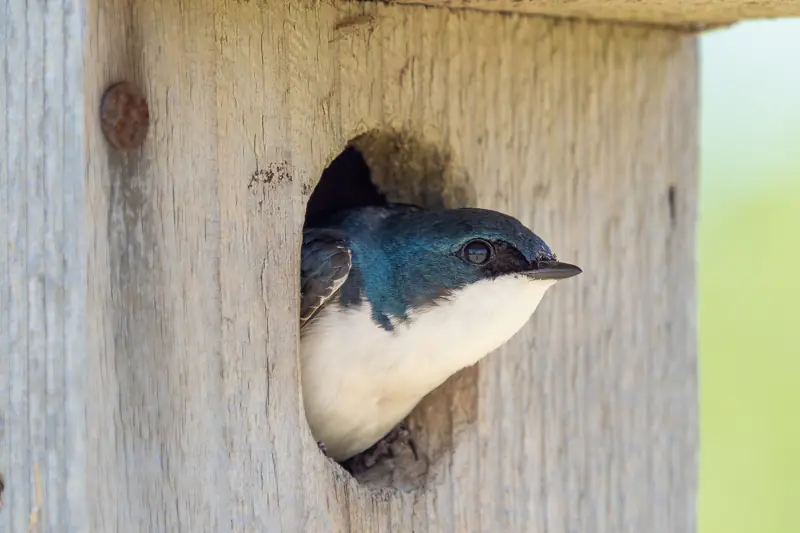
| Spacing | Bluebird boxes well apart (commonly ~100 yards). Two boxes 5–15 ft apart can let tree swallows and bluebirds share |
Recommended ranges vary slightly between sources. See NestWatch’s eastern bluebird plans and the North American Bluebird Society.
- Monitor weekly. Remove house sparrow nests, which are bulky and trashy with feathers and litter. House sparrows are non-native and not federally protected, and they kill bluebird adults and young. Bluebird nests are neat cups of fine grass or pine needles.
- Clean out old nests after young fledge. Bluebirds often raise two or more broods a year.
- Avoid perches on the box and pesticides on the lawn.
Full dimensions for other species are in our nest box guide.
Through the seasons
- Late winter: put boxes up and clean existing ones. Bluebirds start checking sites early.
- Spring and summer: nesting, often two or more broods. Offer mealworms and water, and monitor boxes weekly.
- Fall and winter: bluebirds form small flocks and eat berries. Heated water and suet crumbles help in freezing areas. Some roost together in boxes on cold nights.
Bluebird quick reference
| Food | Mealworms, suet crumbles, native berries; rarely seed |
|---|---|
| Feeder | Dish/cup feeder or enclosed bluebird feeder |
| Habitat | Open short grass with perches |
| Nesting | Nest box, 1½″ hole, on a baffled pole in the open |
| Water | Shallow bath; heated in winter |
Keep exploring
Birdhouse & Nest Box Guide: Dimensions, Placement and Species
Entrance hole sizes, box dimensions, mounting heights and predator guards for common cavity-nesting birds.
Bird Food Guide: Seed, Suet, Mealworms & Nectar
Seed, suet, mealworms, nectar and fruit: what to buy, what to skip and how to store it.
How to Create a Bird-Friendly Backyard
Native plants, water, shelter, nest sites and safety: a step-by-step plan for a yard birds rely on.
Bird Bath Guide: Setup, Placement and Seasonal Care
Depth, placement, drippers and heated baths, plus a cleaning schedule that keeps water safe.
Bird Feeder Poles and Squirrel Baffles
Pole systems, dome vs. stovepipe baffles, mounting heights and the accessories worth adding.
How to Attract More Birds to Your Yard
Ten proven changes to attract more birds, plus guides for cardinals, bluebirds, goldfinches, woodpeckers and more.