How to Attract Hummingbirds to Your Yard
Fresh nectar gets hummingbirds to stop. Native flowers, perches and a few well-spaced feeders get them to stay.
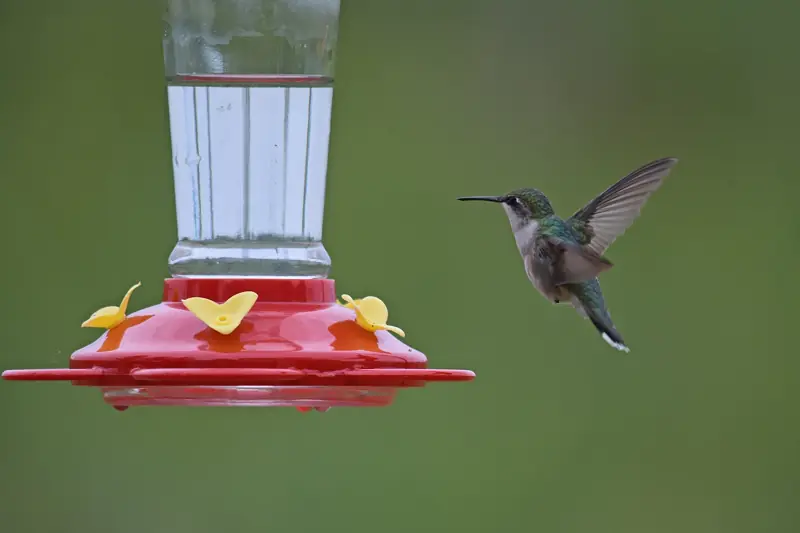
Hummingbirds have good memories for food sources. Banding studies show individuals often return to the same breeding areas year after year. Many ruby-throated hummingbirds reach the U.S. each spring after crossing the Gulf of Mexico. A yard with reliable nectar, flowers and perches becomes a place they check every day.
Know Your Hummingbird Species
Which species you’re targeting affects the approach:
- Eastern US and Midwest: Ruby-throated Hummingbird is the only regularly breeding species. Arrives late April to early May; departs mid-September to October.
- Western US: Multiple species — Anna’s (year-round resident on Pacific coast), Rufous, Black-chinned, Broad-tailed, Calliope, Allen’s, and more depending on region and season.
- Arizona / Texas / New Mexico: The most diverse hummingbird regions in North America — up to 15+ species possible. A well-set-up yard in southeastern Arizona can attract species impossible to see anywhere else in the country.
The setup principles in this guide apply to all species. The timing varies by region.
The feeder: fastest way to get noticed
A hummingbird feeder is the fastest way to establish a yard as a reliable nectar source. A feeder filled with fresh nectar during migration can attract hummingbirds within hours of being put out.
Use this nectar recipe: 1 part white granulated sugar to 4 parts water. No red dye, no honey, no artificial sweeteners. See our complete hummingbird feeder guide for full nectar details, feeder types, and cleaning schedules.
The most common mistake is not changing the nectar often enough. Sugar water spoils quickly in heat. Audubon’s guidance is to change it every day or two in hot weather and less often when it is cool. Clean the feeder each time you refill it, and discard nectar that looks cloudy or has black specks.
Multiple Feeders Beat One Large Feeder
Hummingbirds are highly territorial, especially males. A single dominant bird will often sit near a feeder and chase every other hummingbird away, resulting in only one bird using your setup. Hang 2–4 feeders in different parts of the yard, out of visual line from each other. No single bird can guard all of them, so more birds get a chance to feed.
Native Plants: The Most Powerful Attractor
A yard with native tubular flowers will attract hummingbirds even without a feeder. The combination of feeders and native plants is the most powerful setup possible. Hummingbirds don’t just use flowers for nectar — they use them as territorial markers, perch locations, and hunting grounds (hummingbirds eat insects as well as nectar).
Top Native Plants for Hummingbirds (Eastern US)
- Cardinal Flower (Lobelia cardinalis) — The most powerful hummingbird attractant in the eastern US. Brilliant red spikes bloom in mid-summer exactly when hummingbirds are at peak activity. Grows in sun to part shade, prefers moist soil.
- Trumpet Vine (Campsis radicans) — Vigorous climbing vine with large orange-red trumpets. Hummingbirds are drawn to it from a distance. Note: can be aggressive; plant where it can be contained.
- Coral Honeysuckle (Lonicera sempervirens) — A better choice than Japanese honeysuckle (invasive); red tubular flowers over a very long bloom period from spring through summer.
- Bee Balm (Monarda spp.) — Showy red, pink, or purple flowers in midsummer; hummingbirds work them actively. Also attracts native bees and butterflies.
- Wild Columbine (Aquilegia canadensis) — An early-blooming native that provides nectar in April and May when hummingbirds first arrive and before other plants have flowers.
- Native Salvias — Several native salvias (including Salvia coccinea in the South) are outstanding hummingbird plants with long bloom periods.
Top Native Plants for Hummingbirds (Western US)
- Scarlet Gilia (Ipomopsis aggregata) — Rocky Mountain and Great Basin; brilliant red tubular flowers on tall stems
- Penstemon species — Dozens of native penstemons across the West; red and orange tubular forms are top hummingbird plants
- Hummingbird Sage (Salvia spathacea) — California; low-maintenance groundcover with strong hummingbird draw
- Desert Willow (Chilopsis linearis) — Southwestern desert; long bloom season, reliable Anna’s and Black-chinned attractant
- Ocotillo (Fouquieria splendens) — Sonoran Desert; blooms in spring during Rufous and Broad-tailed migration
Water: The Overlooked Hummingbird Draw
Hummingbirds bathe frequently to maintain feather condition — but they don’t wade into a birdbath like other birds. They prefer to fly through mist or perch near a very fine spray of water. A mister attached to a birdbath or garden hose is an extremely effective hummingbird attractor, especially in dry climates where natural bathing spots are scarce.
Set the mister to produce a very fine spray (not a strong jet) and direct it into or near a shallow dish. Hummingbirds will fly through the mist repeatedly. This is one of the most reliably captivating backyard bird behaviors you can observe.
Perches
Hummingbirds spend much more time perching than people expect — they perch to rest, to defend territory, and to survey the area before approaching a feeder or flower. Thin, bare branches at the right scale (3–5mm diameter for a small bird like a Ruby-throated) are ideal perches. They’ll actively prefer dead branch tips where there’s a clear sightline.
If your yard lacks natural perch options near the feeder, a simple thin wooden dowel mounted on a stake near the feeder area will be used.
When to Put Out Feeders
The rule: put feeders out 1–2 weeks before your expected first hummingbird arrival date. In the eastern US, that means late April. In the West, timing varies by species: Anna’s are present year-round on the Pacific coast; Rufous arrive in the Northwest in spring but pass through the Southwest in late summer southbound migration.
Check eBird’s species maps for your specific location and recent sighting reports to dial in timing for your area.
Avoid These Hummingbird Mistakes
- Red dye in nectar: Unnecessary and potentially harmful. The red on the feeder is enough visual draw.
- Only one feeder: Creates territorial bottleneck; multiple feeders in different sight lines solves this
- Feeders in full sun: Accelerates nectar fermentation; partial shade significantly reduces how often you need to change nectar
- Skipping cleaning: fermented or moldy nectar can make birds sick; clean the feeder every time you refill it
- Taking feeders down in August: leaving feeders up in fall does not stop healthy hummingbirds from migrating. Their departure is driven mainly by changing day length. Late migrants use fall feeders to refuel, so leave yours up until you haven’t seen a hummingbird for about two weeks.
- Non-native invasive plants: Japanese honeysuckle and other invasives may attract hummingbirds but harm the broader ecosystem; native alternatives are always preferable
Watching and photographing hummingbirds
Hummingbirds are small, fast and brief visitors, so a feeder a few feet from a window is the easiest way to get good views. Some camera-feeder brands sell hummingbird-specific models. Most suit larger seed-eating birds better, so check the product’s stated design before buying. Our smart bird feeder comparison covers the trade-offs, and the hummingbird feeder guide covers feeder styles and cleaning.
Hummingbird quick reference
| Nectar | 1 part white table sugar to 4 parts water. No dye, honey or sweeteners. |
|---|---|
| Change nectar | Every 1–2 days in hot weather; every few days when cool |
| Feeders | 2–4 small feeders, out of sight of each other |
| Top plant (East) | Cardinal flower, coral honeysuckle, bee balm, columbine |
| Water | A fine mister or dripper; they fly through spray rather than wading |
| Perches | Thin bare twigs near feeders and flowers |
| Timing (East) | Feeders out by mid-April in the South and late April to early May farther north; keep up until about two weeks after your last sighting |
Keep exploring
Hummingbird Feeder Guide: Nectar, Feeders, Placement & Cleaning
Nectar recipe, feeder styles that are easy to clean, placement and a temperature-based cleaning schedule.
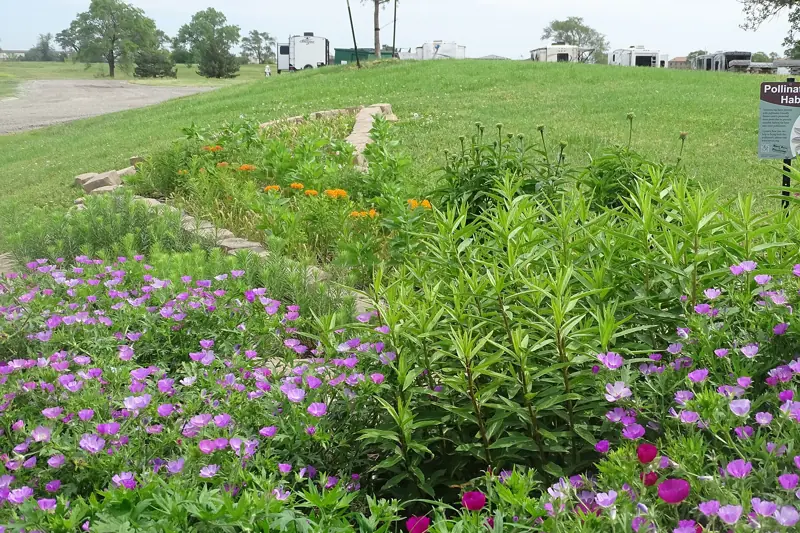
How to Create a Bird-Friendly Backyard
Native plants, water, shelter, nest sites and safety: a step-by-step plan for a yard birds rely on.
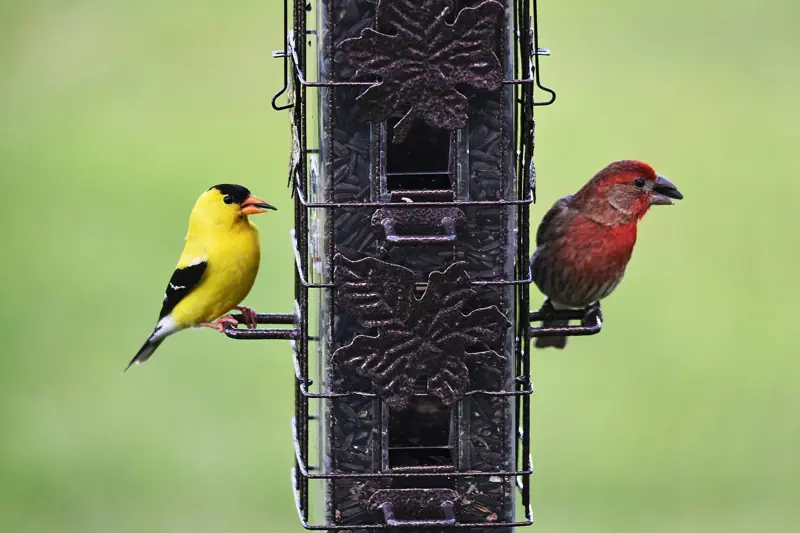
How to Attract More Birds to Your Yard
Ten proven changes to attract more birds, plus guides for cardinals, bluebirds, goldfinches, woodpeckers and more.
Best Bird Feeders by Type
Research-based picks for tube, hopper, platform, finch, suet, window and squirrel-proof feeders.
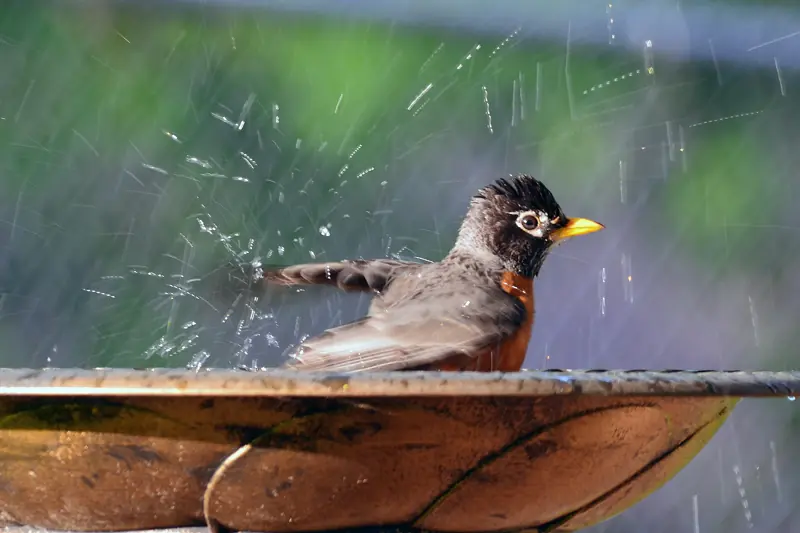
Bird Bath Guide: Setup, Placement and Seasonal Care
Depth, placement, drippers and heated baths, plus a cleaning schedule that keeps water safe.
Bird Food Guide: Seed, Suet, Mealworms & Nectar
Seed, suet, mealworms, nectar and fruit: what to buy, what to skip and how to store it.